
Helping Veterans learn about their benefits
HIGHLIGHTS
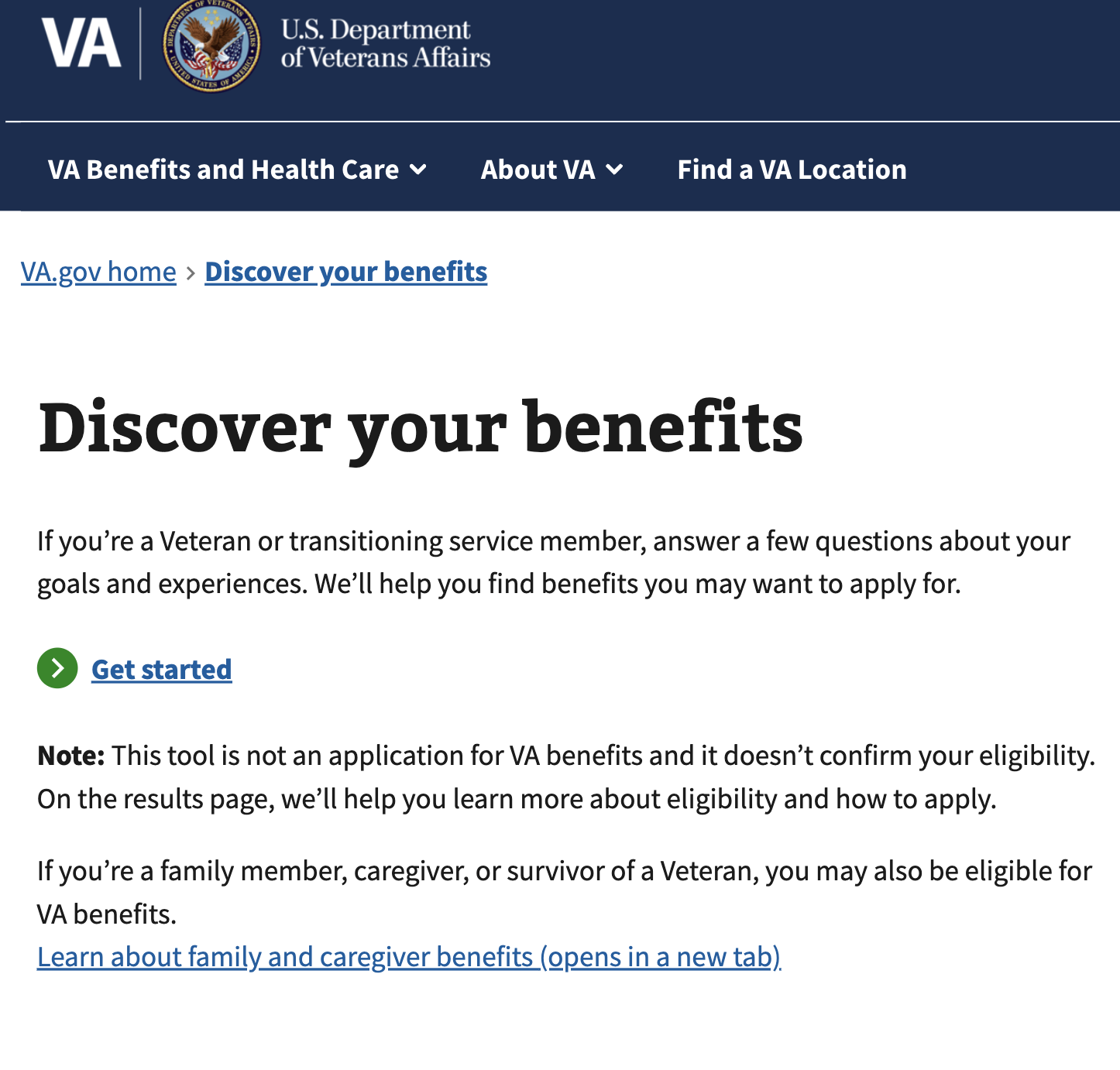
I shaped product design and UX strategy for an app to help Veterans navigate their benefits.
I led foundational interviews and competitive testing to define product scope and market differentiation, identifying an overlooked user segment that expanded the app’s reach by 30%.
I designed a high-fidelity prototype that improved user efficiency satisfaction by over 50% compared to competitors, based on user testing with time-on-task benchmarks and surveys.
I documented research findings and design rationale with UX artifacts (e.g., personas, journey maps).
I presented our prototype to executive-level leadership at the Dept of Veterans Affairs and secured buy-in to proceed with development.
CONTEXT
Many Veterans are not fully accessing the benefits and services they have earned through their service to our country.
Two of the biggest challenges Veterans face is simply not knowing what benefits are available to them and whether they may be eligible.
Sadly, those who need support the most are often the least likely to access it.
GOAL
Develop a tool to help Veterans learn about benefits they may personally be eligible for.
APPROACH
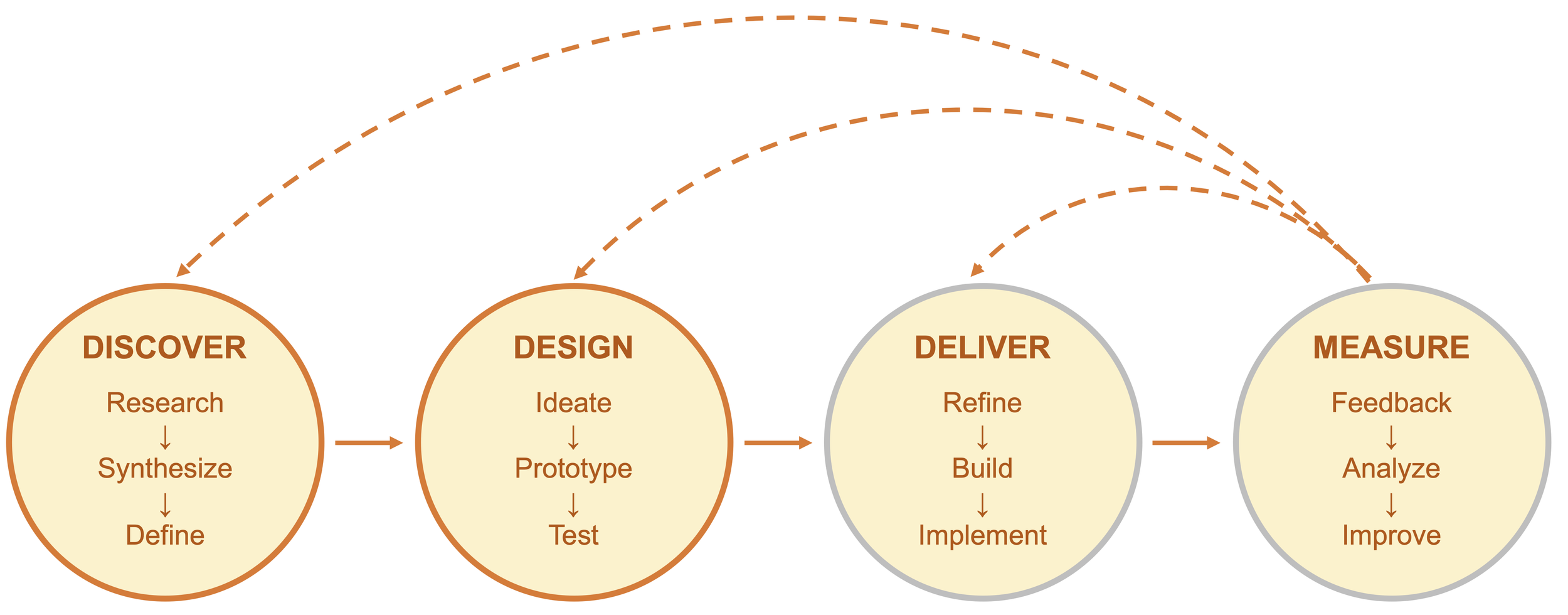
I chose a Human Centered Design approach released by Digital.gov, because it has been developed and vetted by federal agencies, ensuring that our methods aligned with best practices for public sector design and service delivery.
My work on this project spanned the first two phases of this process: Discovery and Design.
ACTIVITY HIGHLIGHTS
DISCOVERY PHASE
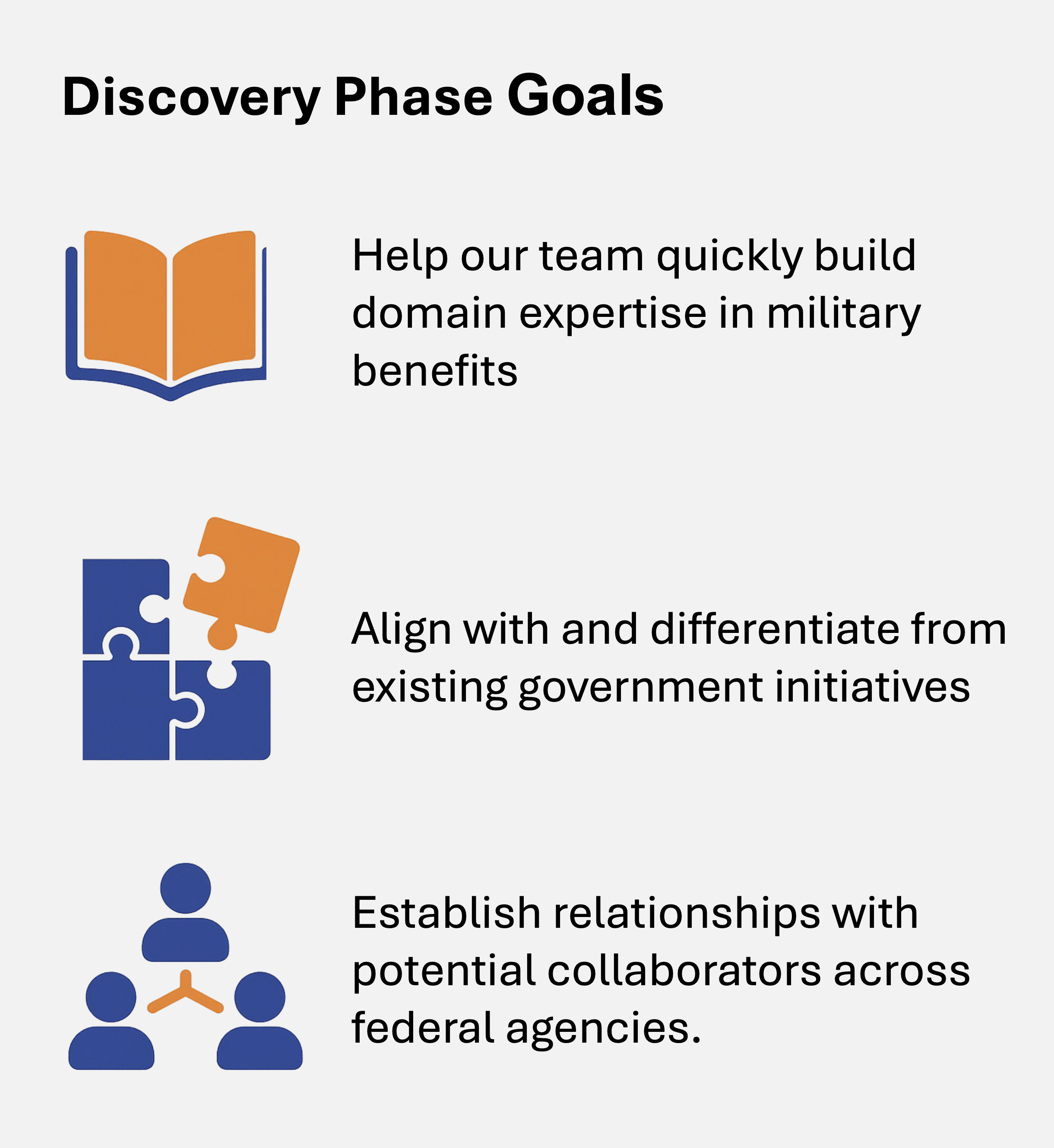
Conduct stakeholder interviews to map and align with existing initiatives.
Accelerate product development in cost-effective way by leveraging existing resources (e.g., data, reports).
Develop personas and a journey map to define where our app could deliver the greatest impact.
Build trust and credibility with potential collaborators across federal agencies by being well-informed and honoring their prior work.
DESIGN PHASE
Designed and conducted open-ended interviews with Veterans to understand pain points associated with navigating benefits.
Designed and conducted competitive testing with competitor apps to identify market gaps and differentiation opportunities.
Partnered with a UX designer to transform research insights into a prototype aligned with VA design standards.
Designed and conducted usability testing with prototype. Carefully selected a range of qualitative and quantitative methods to balance efficiency with depth (e.g., time-on-task, think-aloud, surveys).
Synthesized quantitative and qualitative data into actionable insights via user stories, usability metrics, and strategic recommendations to guide product decisions next phase of product development.
-
Through stakeholder interviews with federal employees, we mapped the landscape of related efforts and identified key collaborators who later joined our working group.
A follow-up literature review ensured our team was well-informed and aligned with existing knowledge. This strengthened our credibility and accelerated development by leveraging existing personas, journey maps, and benefit materials.
I analyzed these existing resources to identify key user groups and developed user personas to guide design. I identified overlooked user segments, such as Guard/Reserve members and family/caregivers of Veterans, increasing the app’s projected reach by over 30%.
I also synthesized a journey map tracing a service member’s path from active duty to civilian life, which clarified when different benefits are most relevant and helped define where our app could deliver the greatest impact.
Together, these activities saved time and resources, honored the work of partner teams, and laid the groundwork for a collaborative, high-impact product strategy from the outset.
-
I led a series of activities to ensure our app was grounded in real user needs and strategically positioned within the broader ecosystem of benefits tools and resources:
Interviews with Veterans
I began by designing and conducting virtual interviews with Veterans to understand their lived experiences navigating benefits information.
By creating space for open-ended, unbiased conversations, I uncovered recurring pain points and unmet needs that directly informed our design direction
Competitive Testing
I then designed and facilitated a competitive testing study that combined qualitative and quantitative methods to evaluate existing tools.
This analysis revealed critical gaps in current solutions and clarified how our product could differentiate itself in meaningful ways.
Prototype Development
I partnered with a UX Designer to translate research findings into a functional prototype, providing iterative hands-on feedback and ensuring alignment with VA design standards.
The prototype brought user needs to life through tangible interactions and served as a powerful artifact for stakeholder engagement.
Usability Testing
To evaluate and refine the prototype, I designed and conducted a usability study that included task-based scenarios, think-aloud protocols, surveys, and the System Usability Scale (SUS).
With limited time per session, I carefully selected methods to balance depth with efficiency.
I synthesized the quantitative and qualitative data into actionable insights via user stories, usability metrics, and strategic recommendations that drove key product decisions in the next phase of development.
ACTIVITY DETAILS
OUTCOMES
Presented prototype to executive leadership at the Dept. of Veterans Affairs, securing buy-in to move forward with app development.
Shaped product concept, scope, and UX strategy through interviews with Veteran Users and Stakeholders.
Expanded app’s projected reach by 30% by identifying overlooked user groups like Guard/Reserve members and family caregivers.
Defined the app’s unique value proposition and key differentiators through competitive testing.
Delivered and conducted usability testing with a research-backed interactive prototype. Findings directly informed MVP requirements, user stories, and product decisions.
Delivered UX artifacts, user stories, MVP requirements, and recommendations that are directly used by the product team to guide MVP development.
This project is ongoing, with continued work planned to support implementation and future user testing.